
I started using CeraVe Vitamin C Serum on a Tuesday in late March, mostly because I had run out of the serum I had been buying for the past two years and could not justify the refill price. My forehead and upper cheeks had been looking flat and uneven since winter, the kind of dull that foundation does not fix. I had dark spots on my left cheekbone from a breakout that healed poorly back in January. I was not expecting much. I have tried enough vitamin C serums to know that most of them smell like pennies, sting a little on application, and require about twelve weeks of religious use before you see anything worth photographing. What I got from this bottle was different enough that I want to walk through it carefully, because the CeraVe formula is genuinely unusual for the price point and some of the differences matter depending on your skin type.
Over six weeks I applied this serum every morning to clean, damp skin on my cheeks, forehead, and the bridge of my nose. I am combination skin, leaning drier in winter and oilier through the T-zone in warmer months. No significant skin conditions, but I do have some residual hyperpigmentation and I notice redness easily if I use too many actives at once. I want to be upfront about that context before I make any claims about what I observed, because skin results are personal and specific.
The Quick Verdict
A well-formulated, genuinely gentle vitamin C serum that delivers real brightening results over six weeks, with ceramides and hyaluronic acid making it more barrier-friendly than most options at this price.
Amazon Check Today's Price →Your skin is dull and you know a vitamin C serum should fix it. This one actually will.
CeraVe Vitamin C Serum combines 10% pure vitamin C with three essential ceramides and hyaluronic acid. Over 43,000 ratings on Amazon and a formula that does not strip the barrier. Check today's price below.
Amazon Check Today's Price on Amazon →How I've Used It
My morning routine during the test period was consistent: gentle cleanser, pat dry leaving skin slightly damp, three drops of the CeraVe Vitamin C Serum pressed into cheeks and forehead, then a light moisturizer, then SPF 30. I did not use any other actives in the morning. At night I occasionally used a low-percentage retinol, but never on the same day I had used a higher-than-normal amount of the vitamin C, to avoid stacking irritation risk. The goal was to give this product a clean read, not muddy the results.
I did not take clinical photos, but I did start keeping a simple weekly note on my phone describing what I was seeing: texture under natural light, how the skin felt by midday, whether the dark spot on my left cheek looked different. That informal log is what I'm drawing from here.
A note on consistency: I skipped two mornings across the six weeks, both times when I was traveling and my routine was compressed. I count that as a realistic use pattern rather than a controlled study. Most people who buy a serum and actually use it will have a similar rate of consistency.
The Ingredient Story: Why the Ceramides Change the Formula
Most vitamin C serums are built around a single goal: deliver ascorbic acid to the skin and let it do its work on melanin production and free radical damage. The tradeoff is that pure ascorbic acid, especially at 10%, is a relatively acidic ingredient. On sensitive or combination skin, it can cause a slight tightening sensation or, over time, contribute to a disrupted moisture barrier if the rest of your routine is not working hard to compensate.
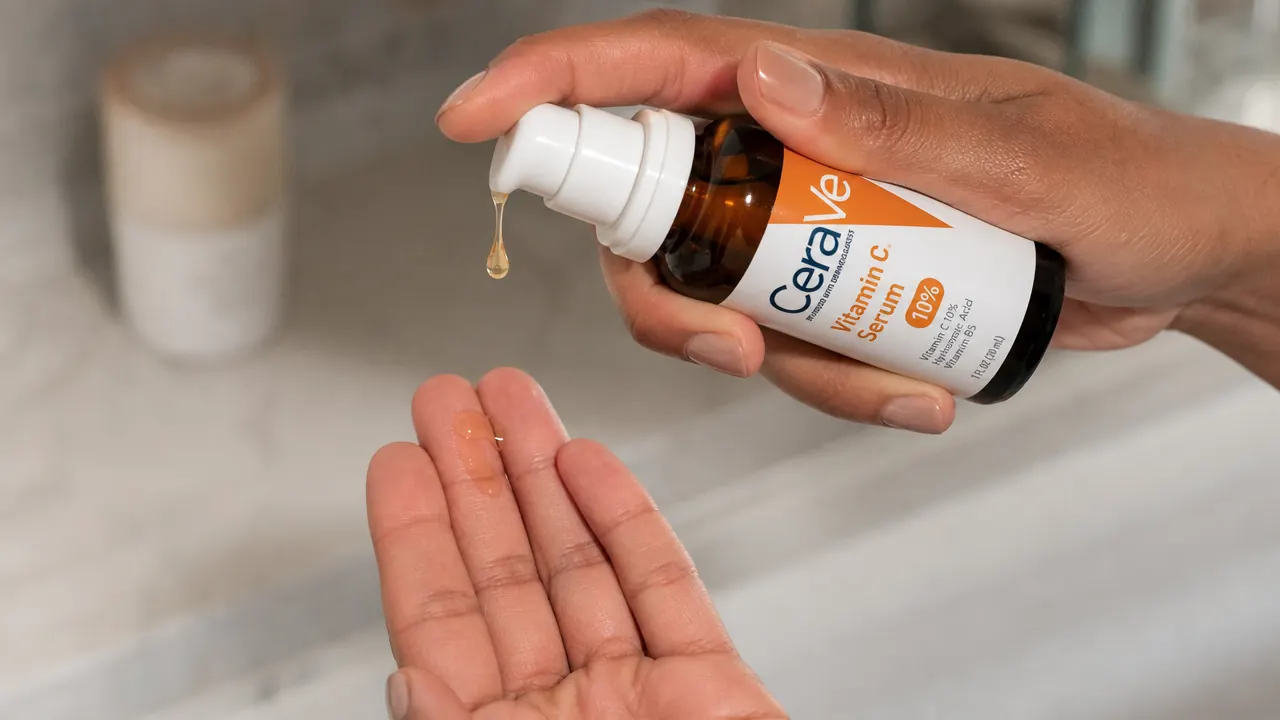
CeraVe builds this serum around ceramides 1, 3, and 6-II, which are the three ceramides they use across their moisturizer line. These are lipid molecules that are naturally found in the skin barrier. Including them in the serum base is not just a marketing decision. It means the delivery vehicle for the vitamin C is also actively supporting barrier integrity rather than just tolerating it. Hyaluronic acid is also included, which draws moisture from the environment into the skin and helps the serum feel less tight after application. For combination skin types, that combination made a difference I could feel within the first week: no post-application tightness, no dry patch development at week two or three the way I have experienced with other vitamin C formulas.
The vitamin C concentration sits at 10% pure L-ascorbic acid. That is toward the lower end of clinical dosing, which typically runs between 10% and 20%, but it is the effective floor for visible results on hyperpigmentation. Higher concentrations are more effective in theory but also more irritating and more prone to oxidizing quickly in the bottle. For someone new to vitamin C, 10% is the right place to start. For someone who has been using a 15% or 20% formula and wants to switch, the results will likely feel slightly more gradual.
The ceramides are not just a CeraVe brand signature. In this formula they are doing real work, keeping the serum from tightening skin the way a plain ascorbic acid formula does.
What I Observed Week by Week
Weeks one and two were uneventful in the best way. No irritation, no breakout, no purge. The serum has a faint citrus scent that dissipates in about thirty seconds and does not linger under moisturizer. Texture is a thin, slightly gel-like liquid that absorbs without leaving any residue. By the end of week two my skin felt consistently more hydrated through the day than it had during the dry winter months, which I attribute largely to the hyaluronic acid.
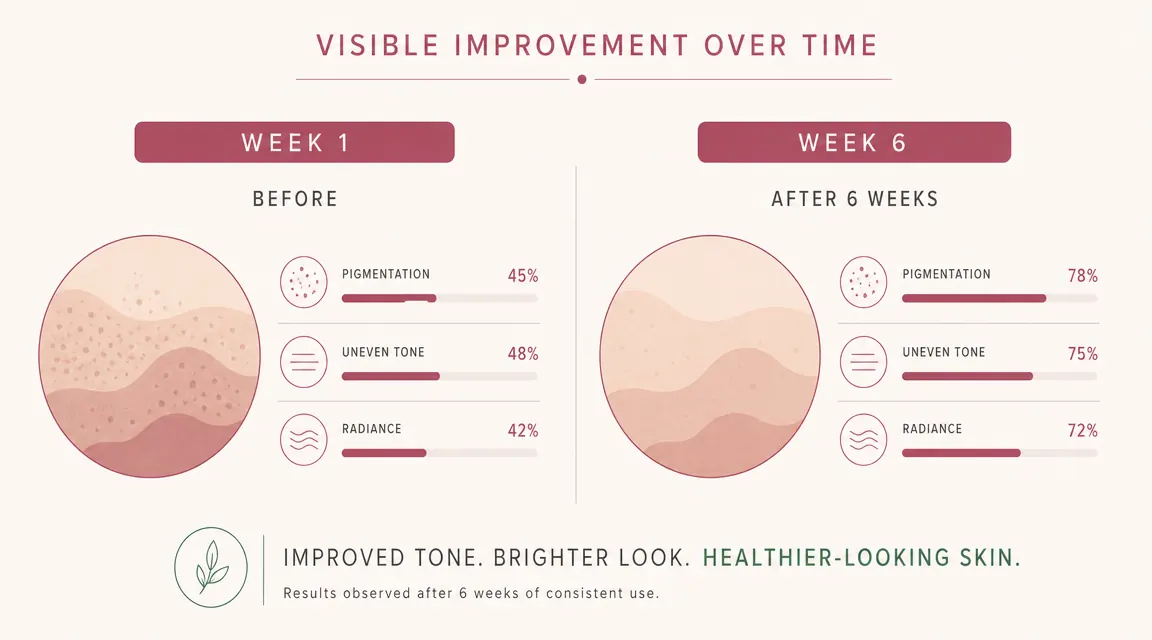
By week three I started noticing that my skin tone looked more even in the bathroom mirror under natural light. Nothing dramatic, but the flat, grayed-out look I had going into the test had reduced. The dark spot on my left cheekbone had not faded at three weeks, which is completely expected. Hyperpigmentation takes longer.
Weeks four through six is where I saw the most visible change. The dark spot on my left cheek went from a distinct medium-brown mark to something softer and less defined, not gone, but noticeably lighter, maybe 25 to 35% improvement by my estimate. Skin texture on my forehead felt smoother and looked less textured under direct light. I had a few friends notice that I looked less tired, which is usually what people say when skin tone evens out without them being able to name what changed.
Where It Falls Short
This is not the most potent vitamin C serum on the market and it would be misleading to present it as one. If you have significant hyperpigmentation, deep sun spots, or post-inflammatory marks that have been there for more than a year, 10% ascorbic acid applied once a day is going to be a slow process. I have seen 15% and 20% formulas produce faster results on persistent discoloration, and for someone with a specific target they want addressed on a timeline, a higher-concentration serum from a brand like SkinCeuticals or Paula's Choice might be a better fit even at a higher price.
The bottle format is also worth noting. It is a standard pump with a solid opaque bottle, which is good for preventing oxidation. But the pump dispenses a fairly large drop each press, and you only need two to three drops for a full face application. I found I was sometimes getting more than I needed and had to tap the excess into my neck and decolletage. Not a problem, but worth knowing if you are managing usage carefully.
And I should mention: for oily skin types who are sensitive to hyaluronic acid layering, this formula could feel slightly heavy under moisturizer in humid conditions. I did not find this to be an issue in spring conditions, but I would want to test it through summer before making a confident call for very oily skin.
What I Liked
- Ceramide-plus-vitamin-C combination genuinely reduces the tightening sensation common with pure ascorbic acid formulas
- Visible brightening and dark spot improvement within six weeks at consistent use
- No scent that lingers, no sting on application, tolerates well on combination skin
- Stable formula in opaque bottle with pump, which extends the shelf life of ascorbic acid
- One of the most accessible price points for a 10% pure vitamin C serum with barrier-support ingredients
Where It Falls Short
- 10% concentration is effective but not fast, persistent deep spots will take longer than six weeks
- Pump dispenses slightly more product than needed per application
- Hyaluronic acid base may feel heavy for very oily skin in warm or humid conditions
- Not ideal as a first or only vitamin C choice for someone with significant, long-standing hyperpigmentation who wants faster results

How It Compares to What I Was Using Before
Before switching to this bottle I had been using a 15% vitamin C serum from a smaller brand that cost roughly three times as much per ounce. That formula was more effective on the dark spot, I will be honest about that. I saw equivalent progress in about four weeks versus what took me six weeks here. But that formula also gave me a mild tight, slightly stinging feeling on application twice a week, and by month two I had to back off to every other day because I was developing minor dry patches at the corners of my nose. The CeraVe serum has not done that to my skin once across six weeks of daily use.
Whether that tradeoff matters depends entirely on your skin. For combination or sensitive skin, the CeraVe formula is a better daily driver. For oily skin without a strong moisture barrier concern, a higher-concentration serum might deliver results faster without the same tolerability risk. I would not tell someone with persistent, deep hyperpigmentation that this is the fastest option available. I would tell them it is a very good option that is unlikely to cause additional problems while it works.
Who This Is For
This serum works best for people with combination, normal, or sensitive skin who want a reliable, daily vitamin C with a formulation that is barrier-friendly. It is particularly well-suited for anyone who has tried vitamin C serums before and found them irritating, or for someone building a vitamin C habit for the first time who does not want to manage tolerability issues on top of everything else. If your primary concern is general dullness, uneven tone, or early hyperpigmentation from recent breakouts, six weeks of consistent use at 10% will produce visible improvement. It is also a strong pick for mature skin that tends to run dry or tight with most actives, because the ceramide base keeps the texture comfortable throughout the day.
Who Should Skip It
If you have established, stubborn sun spots or melasma that you want to address on a defined timeline, start with a higher-concentration formula or pair a vitamin C serum with a hydroquinone product under dermatologist guidance. This serum will help with those concerns, but slowly. Similarly, if you already use a 15% or 20% vitamin C without irritation and you are happy with your results, there is no compelling reason to step down to 10%. The ceramide angle is genuinely useful for sensitive or combination skin, but if your barrier is robust and you are chasing speed, a stronger formula makes more sense. And if cost is not a factor at all and you want the most studied vitamin C formulation available, SkinCeuticals C E Ferulic at 15% remains the benchmark, though the price difference is substantial.
Six weeks of daily use, visible results, no irritation. The CeraVe Vitamin C Serum is hard to beat at this price.
If you have combination or sensitive skin and want a vitamin C serum that works without disrupting your barrier, this is the one I would buy again. Over 43,000 Amazon reviews agree it delivers. Check today's price and see if it is right for your routine.
Amazon Check Today's Price on Amazon →