
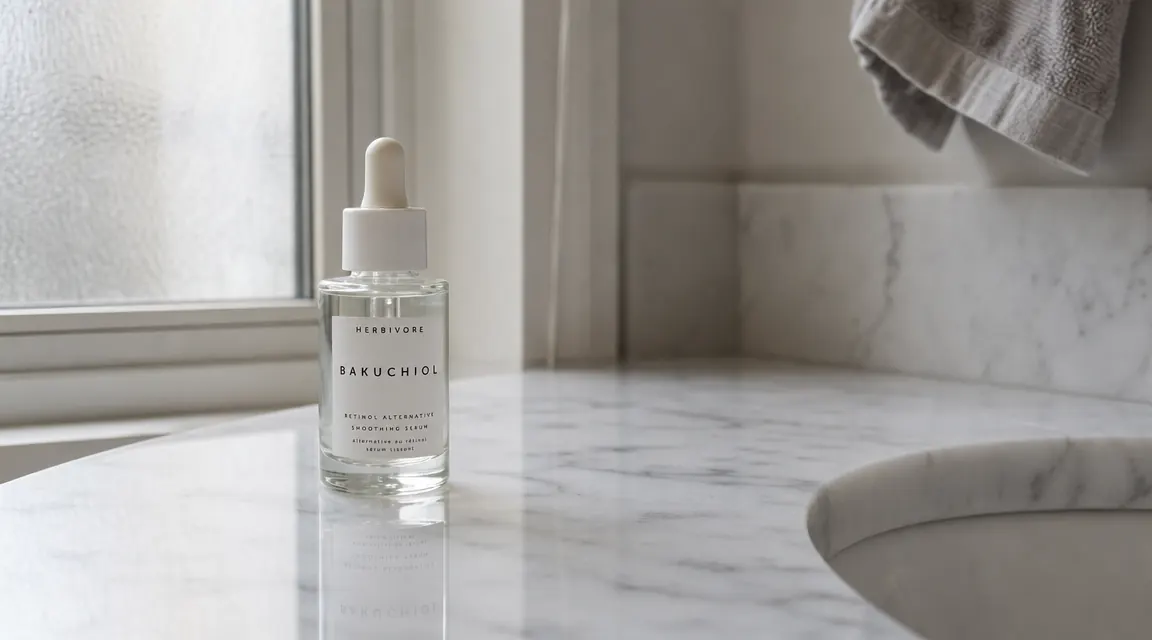
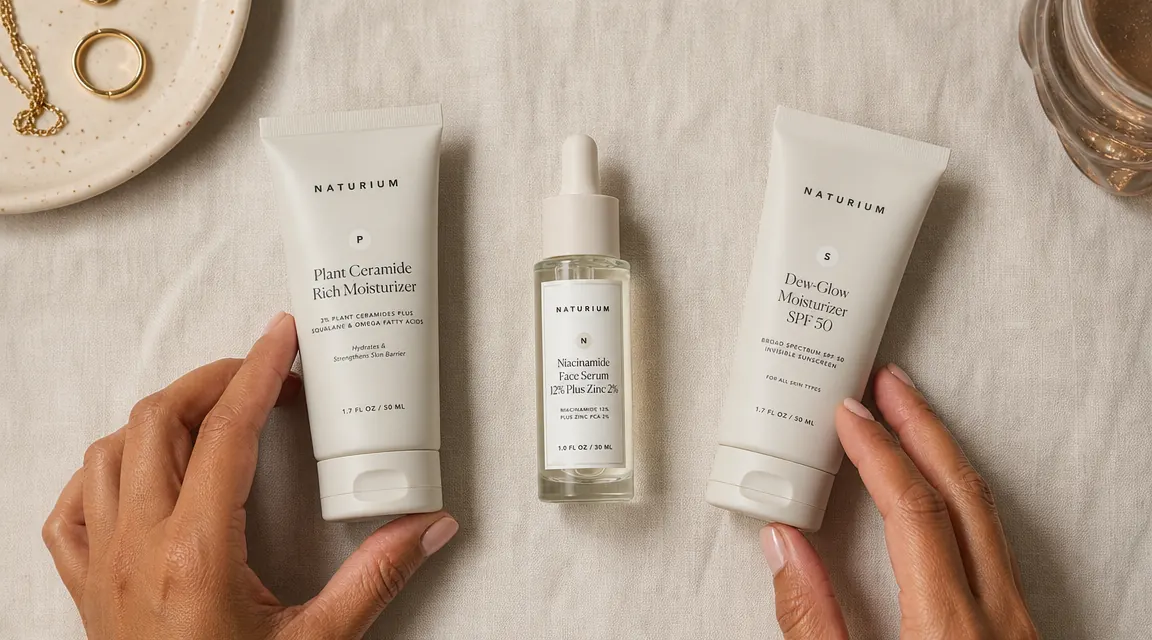
The number on the label is doing a lot of work. When Naturium launched its niacinamide serum at 12% plus 2% zinc, it positioned itself clearly against the field, most of which sits at 10%. That extra two percentage points is not an accident. It is a claim, and the question worth asking is whether it translates into anything your skin would actually notice, or whether it is mostly a marketing lever pulling buyers away from cheaper options with identical outcomes.
I have been buying and testing skincare professionally for years, and when a formulation detail gets promoted as a reason to buy, I want to know if it holds up. So I spent several weeks using Naturium Niacinamide Serum 12% Plus Zinc 2% specifically to answer the concentration question, not just to report back on whether my skin got clearer. This review is about the formula logic, not the feel-good narrative.
The Quick Verdict
A well-constructed niacinamide serum that delivers on pore and oil-control claims, but the jump from 10% to 12% offers marginal real-world benefit for most skin types. Worth it for the price. Not the leap in class the label implies.
Amazon Check Today's Price →Skip the concentration guessing game, see Naturium's current price and reviews on Amazon.
With 16,000-plus ratings and a formula that holds up under scrutiny, Naturium Niacinamide 12% is one of the better-value serums in its category. Check today's price before the next pricepoint shift.
Amazon Check Today's Price on Amazon →What the Research Actually Says About Niacinamide Concentration
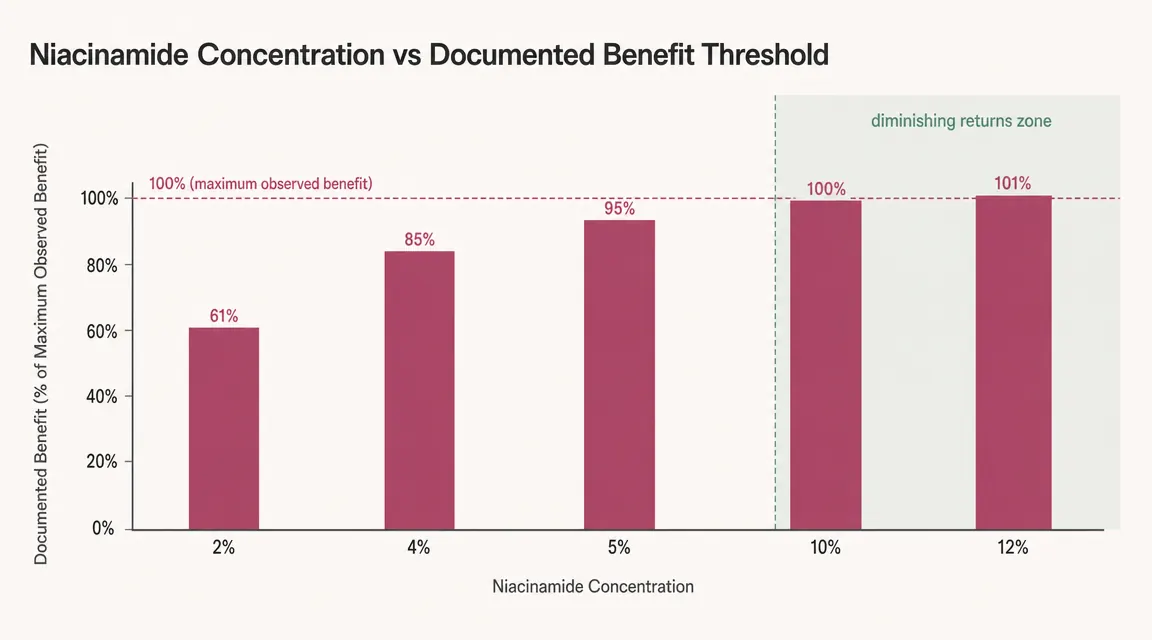
The peer-reviewed literature on niacinamide is reasonably solid. Studies have documented benefits for sebum regulation, skin barrier support, and hyperpigmentation reduction at concentrations ranging from 2% up to 5%. A handful of studies push into the 10% range, where the evidence shows continued but not dramatically greater benefit. Above 10%, the clinical data thins out considerably.
What that means practically: going from 5% to 10% is a meaningful step. Going from 10% to 12% is less clearly so. The skin's nicotinamide adenine dinucleotide (NAD+) pathway has a ceiling on how much substrate it can process at a given rate, and topical application has limited penetration depth regardless of concentration. Packing more niacinamide into the formula does not automatically mean more of it is working on the problem you care about.
That said, formulation context matters. Niacinamide is water-soluble and degrades in acidic environments. If the rest of the formula maintains a pH close to neutral, higher concentrations have a better chance of remaining stable and active through the full shelf life of the product. Naturium's formula comes in at approximately pH 6 to 6.5, which is reasonable for stability. So the 12% is not wasted, it is just not the transformative upgrade the number alone might suggest.
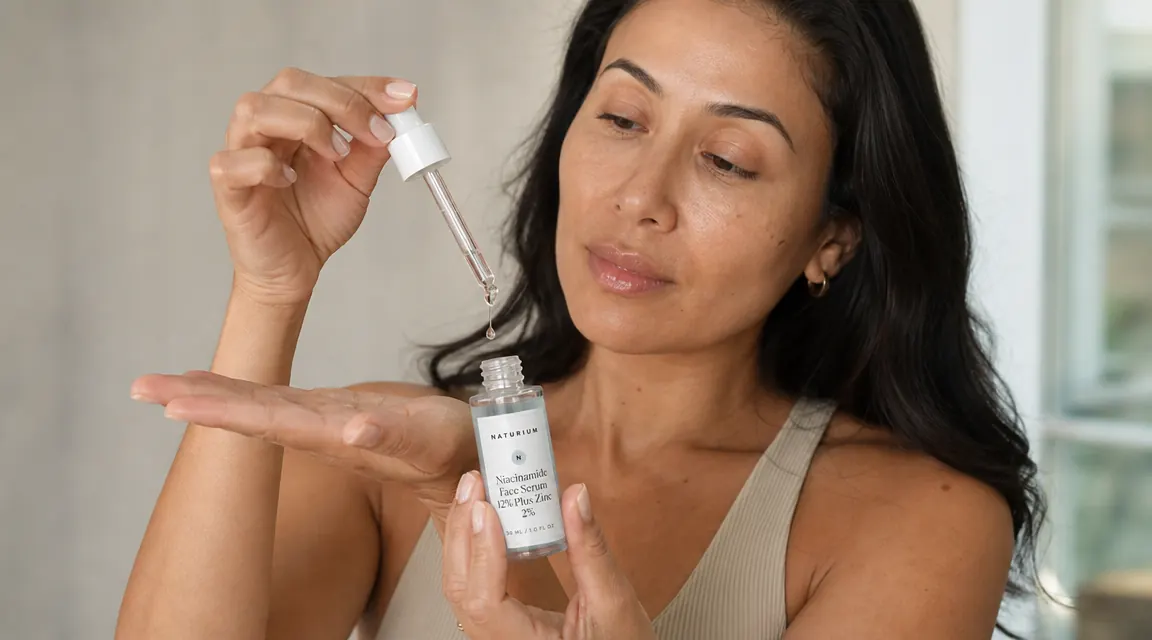
The Zinc 2% Addition: What It Actually Does Here
Zinc in skincare serums typically appears as zinc PCA or zinc gluconate. Naturium uses zinc PCA, which is one of the better-tolerated forms and has research backing for sebum regulation. The 2% concentration sits at the upper end of what you would find in this category. Combined with niacinamide, zinc creates a one-two approach to oily skin: niacinamide works through the nicotinic acid receptor pathway to regulate sebaceous output, while zinc PCA provides a secondary regulation signal through a different mechanism.
If your primary complaint is persistent oiliness, the zinc addition is meaningful. If your main concern is brightening or barrier repair, the zinc is doing less of the heavy lifting. I mention this because some buyers pick up this serum based on redness or hyperpigmentation concerns and then underperform on those expectations because the zinc is calibrated for oil, not color correction.
The jump from 10% to 12% niacinamide is less about clinical breakthrough and more about honest headroom in a formula that's already doing its job well. The zinc is the part worth paying attention to.
How I Used It and What I Was Looking For
I used this serum on combination-to-dry skin, which is not the advertised target demographic. The product is clearly formulated for oily and pore-prone skin, and I wanted to see how the higher concentration behaved on a skin type that sits outside the brand's core positioning. I applied two to three drops to clean, dry skin in the morning, followed by SPF. No vitamin C layered beneath it (niacinamide and vitamin C are a compatibility non-issue at typical formulation pH levels, but I wanted a clean read on the serum's solo effect).
Week one was uneventful. No tingling, no adjustment reaction. Texture absorbed without residue, which is worth noting because this serum has a slightly thicker feel than the wateriest niacinamide options on the market. It is still thin enough to layer comfortably under a moisturizer, but it is not the same as applying water.
By week three, I noticed a visible reduction in the redness I typically carry around my nose and chin. This tracks with niacinamide's anti-inflammatory mechanism. What I did not notice was any significant change in my skin's hydration level, which is expected. This formula is not targeting moisture, it is targeting clarity and oil regulation. On that narrower metric, it performed.
Comparing It to The Ordinary's 10% Formula
The natural comparison point is The Ordinary Niacinamide 10% Plus Zinc 1%, which sits at roughly half the price and uses a similar dual-ingredient approach. Having used both extensively, here is what I can tell you honestly: the on-skin performance difference is smaller than the label difference suggests. The Ordinary formula is thinner in texture and feels more like water on application. Naturium's formula has a bit more slip and a slight cushion to it, which some people prefer and others find unnecessary.
The zinc content difference (2% vs 1%) is more noticeable than the niacinamide gap. Users with persistently oily skin have a clearer reason to choose Naturium on the zinc alone. If you have oily skin that responds well to The Ordinary's version but still struggles with midday shine, moving to Naturium's higher zinc content is a reasonable next step.
If your skin is normal, dry, or sensitive and you are buying primarily for brightening, the price gap between the two does not reflect a meaningful performance gap. Both serums will offer similar brightening and redness-calming results. For oily and pore-prone skin specifically, Naturium's formula has a legitimate edge in the zinc department. That is the honest breakdown.
What the 16,000 Reviews Are Not Telling You
A 4.5-star average across 16,000 ratings is genuine signal. Products do not accumulate that kind of volume on marketing alone. But reviews skew toward satisfied buyers, and the patterns in critical reviews are worth looking at separately.
The recurring complaints cluster around two issues. First, some users with sensitive or rosacea-prone skin report initial flushing during the first week of use. Niacinamide at higher concentrations can cause a mild vasodilatory response in some skin types, similar to the niacin flush you can get from high-dose oral supplements. It is usually transient but it is more likely at 12% than at 5%. If you have reactive skin, starting every other day for the first two weeks is worth doing.
Second, a minority of users report the serum pilling under certain moisturizers. Pilling happens when a serum does not fully absorb before a thicker product is layered on top. Naturium's slightly denser texture makes this more likely than with ultra-thin formulas. The fix is simple, wait 60 to 90 seconds after applying the serum before adding anything else, but it is something the product page does not mention.
What I Liked
- 12% niacinamide plus 2% zinc is a well-dosed combination for oily and pore-prone skin
- pH around 6 to 6.5 keeps niacinamide stable and active through the product's shelf life
- Texture absorbs cleanly without greasiness or white cast
- Redness-calming effect is noticeable within 2 to 3 weeks on most skin types
- Broadly compatible with SPF, moisturizer, and most actives
- 16,000-plus reviews represent real user experience, not just launch hype
Where It Falls Short
- The 12% vs 10% advantage is clinically marginal for most people, especially those not oily
- Slightly denser texture can pill under certain heavier moisturizers if not given adequate dry time
- A minority of sensitive or rosacea-prone users report temporary flushing in the first week
- Does not address dehydration or barrier repair, not a multi-purpose serum
- No meaningful brightening advantage over cheaper 10% formulas for non-oily skin
How It Fits Into a Routine (And What to Pair It With)
Niacinamide is one of the most forgiving actives to layer. It plays well with retinol, vitamin C, hyaluronic acid, and exfoliating acids without compatibility concerns at standard formulation pH ranges. Apply it after cleansing but before heavier serums or moisturizers. In the morning, follow with SPF. At night, this serum pairs cleanly under a ceramide-based moisturizer if your skin needs barrier support alongside the oil control.
One combination worth noting: if you are using a low-pH vitamin C serum and want to add niacinamide to your routine, apply the vitamin C first, wait a few minutes for pH to stabilize, then apply the niacinamide. The concern about niacinamide converting to niacin in the presence of vitamin C is largely overblown at the concentrations and contact times involved in real skincare use, but sequencing them with a brief pause avoids even the theoretical interaction.
Who This Is For
The clearest use case for Naturium Niacinamide 12% Plus Zinc 2% is someone with oily, combination, or acne-prone skin who is already using (or has tried) a 10% niacinamide formula without getting full oil-control results. The higher zinc content gives you a meaningful additional tool for sebum regulation. It is also a good first niacinamide serum if you want a slightly more substantial texture than the thinnest options on the market. Visible results on pore appearance and redness are realistic within four to six weeks of consistent daily use.
Who Should Skip It
If your skin is dry or dehydrated and you are looking for something that does more than regulate oil, this serum is not the right tool. It does not add moisture. It does not repair the barrier in any significant way on its own. You would get similar brightening results from a less expensive 10% formula and save the difference for a hydrating layer that actually addresses your skin's primary complaint. Similarly, if you have very reactive or rosacea-prone skin, the 12% concentration raises your flush risk and a 5% formula would be a safer starting point.
If oily skin and visible pores are the actual problem, Naturium's 12% formula has the zinc content to back up its claims.
It sits at a price point that makes consistent use realistic, and the formula holds up under scrutiny. Check Amazon for today's price and current availability before you decide.
Amazon Check Today's Price on Amazon →