
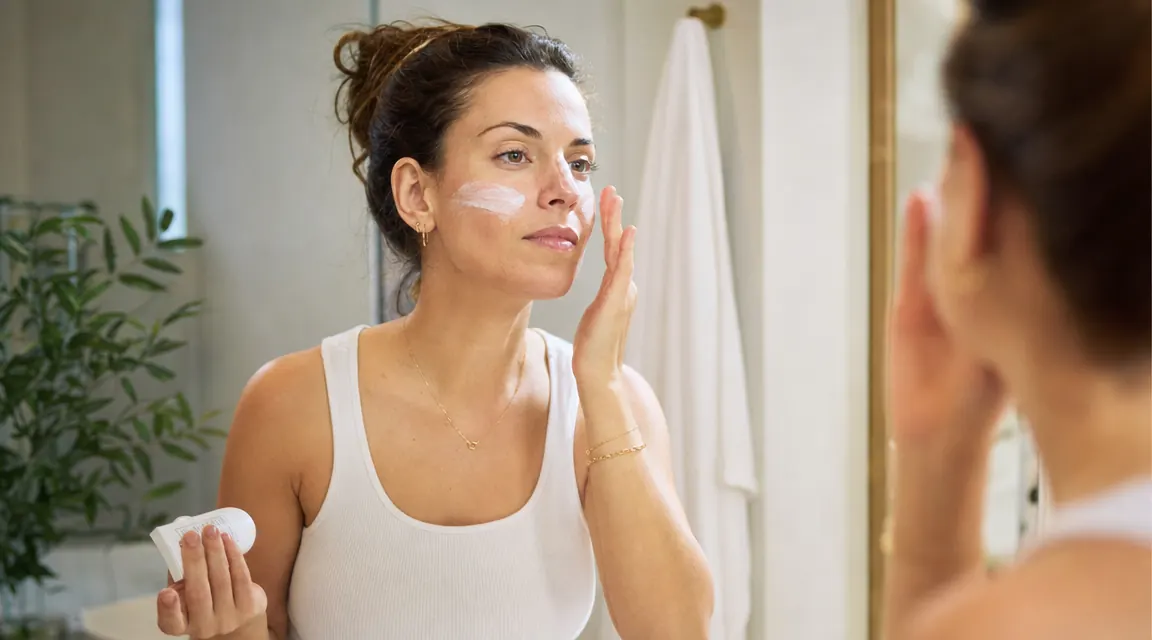
I skipped sunscreen more mornings than I want to admit. Not because I didn't know I needed it. Because every mineral SPF I tried left me looking gray or caused my foundation to pill into little flecks by mid-morning. I'd put in the effort and end up looking worse than if I'd skipped it entirely.
That pattern ended when I figured out that the white cast and pilling problems are almost never about the sunscreen formula alone. They're about technique and layering order. Once I fixed both, I started wearing SPF every single day without thinking twice. This guide covers exactly what changed for me, step by step, plus the one tinted mineral formula that made the whole system easier.
If your sunscreen is pilling or leaving a gray tint, try the tinted mineral formula I use before changing your technique.
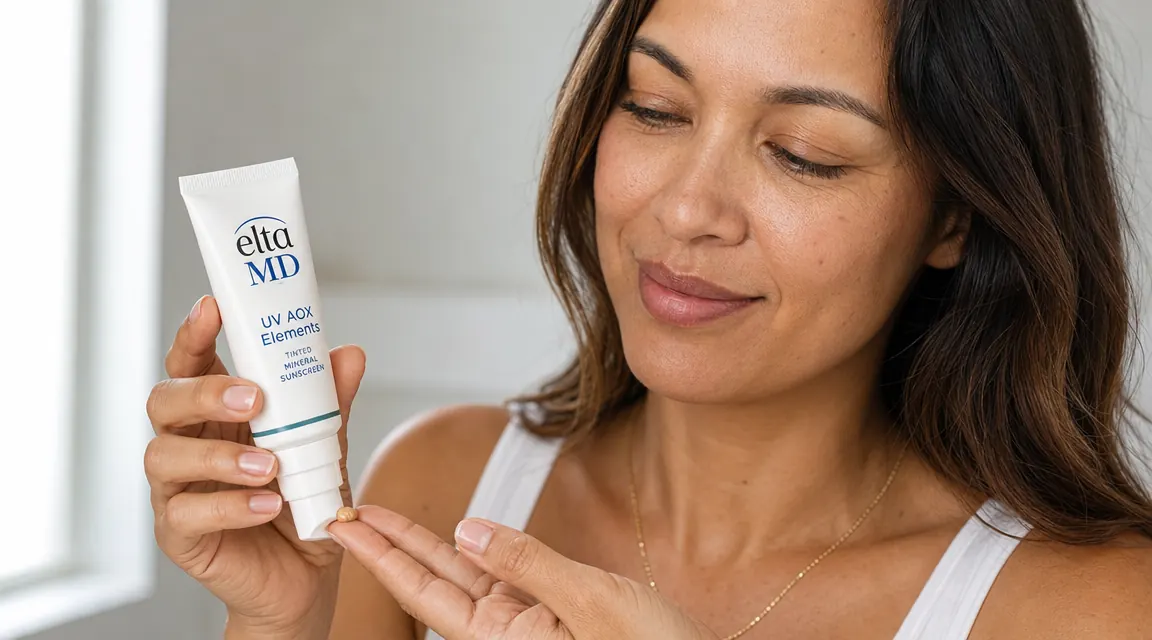
EltaMD UV AOX Elements Tinted SPF 50 is a 100% mineral formula with a built-in tint that neutralizes zinc's natural white cast. It layers flat under makeup and has a 4.6-star rating across nearly 15,000 Amazon reviews.
Amazon Check Today's Price on Amazon →Step 1: Start With a Clean, Lightly Damp Face
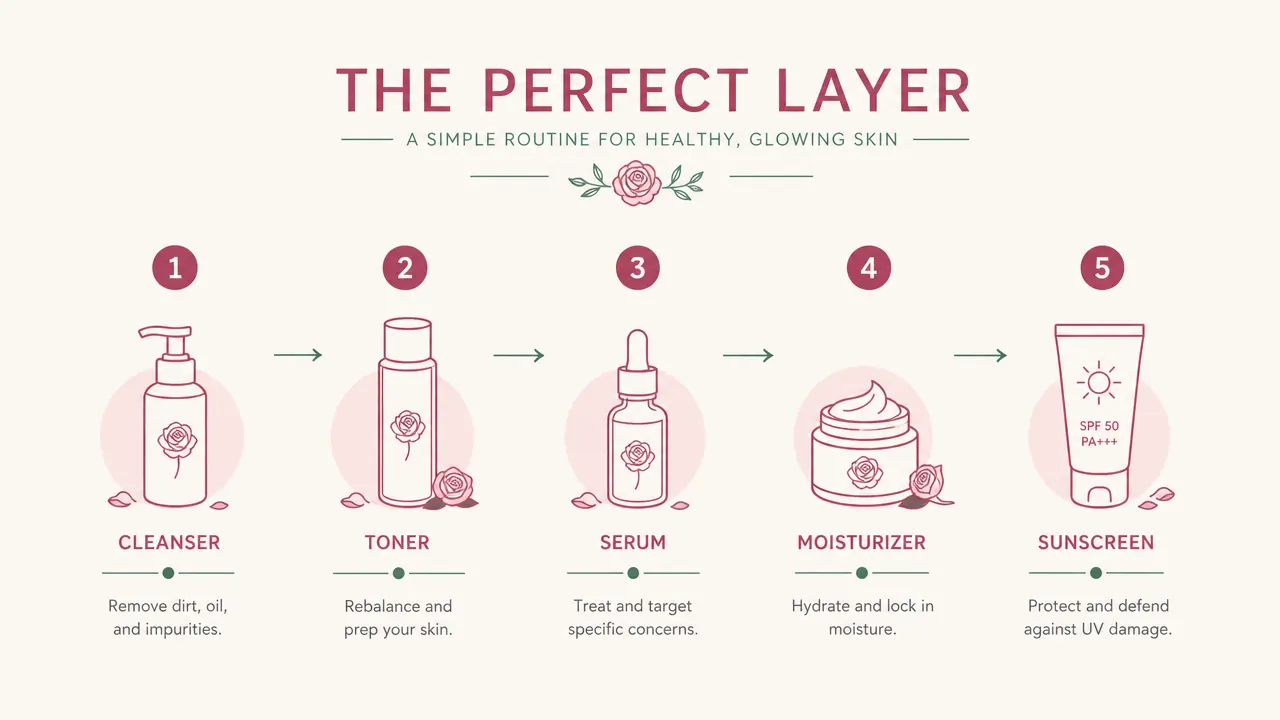
Sunscreen applies more evenly on skin that isn't bone dry. After cleansing, I pat my face with a towel but leave it slightly damp before anything else goes on. Not wet, just not tight-feeling. That slight residual moisture helps the first product spread without dragging.
This is also the step where I think about what I am not going to do: I don't apply sunscreen directly to dry skin right after a niacinamide serum or a thick moisturizer that hasn't finished absorbing. Both cause pilling because the products are fighting each other. Give each layer 30 to 60 seconds to settle before adding the next.
If you use any actives like vitamin C or retinol, those go first, well before the SPF step. Sunscreen is always the last skincare product, never the first.
Step 2: Apply Your Serum and Let It Absorb Fully
The biggest pilling culprit I've found is rushing past the serum step. I used to stack products one right after another and then wonder why my sunscreen balled up the second I spread it. The issue is that water-based serums need time to absorb before an oil-containing sunscreen goes on top. Most people wait 10 to 15 seconds, which isn't enough.
I give my serum at least 60 seconds to sink in. If I'm in a hurry, I apply serum, then brush my teeth or pour coffee, then come back for moisturizer. By the time I'm ready for SPF, everything below it is dry and ready. That single change cut my pilling problems by about 80 percent before I even switched sunscreen formulas.
Step 3: Apply Moisturizer and Wait Again
If you use a separate moisturizer, it goes before sunscreen. Apply it to damp skin (that light dampness from earlier helps here), pat it in with your fingertips rather than rubbing, and then wait for it to absorb. Most lightweight moisturizers need 30 to 60 seconds. Thicker creams or occlusives may need two minutes.
One thing worth noting: some sunscreens are formulated to replace your moisturizer entirely. EltaMD UV AOX is one of them. It contains hyaluronic acid and antioxidants, so on days when I want to keep things simple, I skip the separate moisturizer and go straight from serum to SPF. That approach actually produces the cleanest results for me, because there's one fewer layer that can contribute to pilling.
Pilling is almost never the sunscreen's fault on its own. It's what happens when you don't give the layer underneath enough time to absorb.
Step 4: Dispense the Right Amount of Sunscreen
Most people use too little sunscreen to get the rated SPF. The standard guideline is about a quarter teaspoon for your face alone, which is roughly two or three finger lengths of product for most people. With a pump dispenser, that's usually two full pumps.
I dispense my EltaMD UV AOX directly onto my fingertips. With tinted formulas, you can see where the product is going, which helps you spread it more evenly than you would with a white or clear formula. Dot the product onto your forehead, nose, cheeks, and chin before spreading, rather than applying it all in one spot and dragging it across your face. Dragging creates uneven coverage and can disturb the layers underneath.
One reason I find EltaMD specifically easier to use correctly: the tint gives you immediate visual feedback. You can see if you've missed a patch, and the coverage is visually even before you've finished blending.

Step 5: Blend Using a Pressing and Patting Motion, Not Rubbing
This step is where most of the white cast problems I used to have disappeared. I was rubbing my sunscreen in with my palms, the way you'd apply a lotion. That motion creates friction that can cause mineral particles, specifically zinc oxide and titanium dioxide, to sit on top of skin in a way that catches light and looks white or chalky.
The fix is to use your fingertips and work in small pressing and patting motions. Press the product gently into the skin, then use short horizontal or circular strokes to blend edges. Work outward from the center of your face. Take your time on the jaw, hairline, and around the nose where product tends to collect unevenly.
With a tinted mineral formula like UV AOX, the blending step is more forgiving because the iron oxide pigments in the tint break up the zinc oxide's reflective properties. The result is a slight skin-evening finish rather than a gray cast. I still use the pressing motion out of habit, and I think it does give a cleaner result than rubbing, but the tint does a lot of the heavy lifting here.
Step 6: Wait Two Full Minutes Before Applying Makeup
This is the step I resisted the longest because it feels slow. But it matters. Applying foundation, powder, or any makeup over sunscreen that hasn't fully set is the most common cause of pilling and disrupted coverage. The sunscreen is still mobile, and dragging a sponge or brush over it moves the product around rather than laying color on top of it.
Two minutes is usually enough for a mineral formula to set. I use the time to finish my hair or pick out what I'm wearing. When I come back and apply a light powder or tinted moisturizer on top, everything stays put. No balling, no gray patches, no foundation separating at the nose by noon.
If you prefer a makeup-free look, you can stop after the SPF step. EltaMD UV AOX has enough pigment to even out mild redness and give skin a polished, put-together finish on its own. I wear it without makeup several days a week when I don't have meetings or I'm working from home.
Why Tinted Mineral Sunscreen Fixes Most of These Problems Faster
Everything above works with any well-formulated sunscreen. But if you've tried the technique fixes and you're still getting white cast, the formula itself may be the problem. Traditional mineral sunscreens use zinc oxide and titanium dioxide, which are physically reflective. On deeper or medium skin tones, that reflectivity reads as gray or chalky under any light.
Tinted mineral sunscreens mix iron oxide pigments into the formula, which neutralizes that reflective effect and adjusts the finish to be closer to a natural skin tone. EltaMD UV AOX Elements Tinted is a 100% mineral SPF 50 that uses this approach. The tint is light enough to work across a range of medium skin tones, and it skews warm rather than pink, which reads more naturally in most lighting.
There's also a secondary benefit for people who wear makeup: iron oxide in tinted sunscreens provides some protection against visible light and blue light from screens, which untinted mineral and chemical SPF formulas don't address. That's not the main reason to buy it, but it's a real bonus for anyone working in front of a monitor most of the day.
What Else Helps With Long-Wear SPF
A light setting powder pressed over your finished sunscreen-and-makeup application can extend how long everything stays in place, particularly in warm weather or if your skin runs oily. I use a translucent mineral powder very lightly on my T-zone. It locks down the SPF layer without disrupting coverage and keeps my skin from looking shiny by 2pm.
For reapplication during the day, powder SPF compacts or SPF setting sprays are more practical than reapplying a cream sunscreen over makeup. You won't get identical protection to a fresh morning application, but consistent use throughout the day is better than one thick morning layer and nothing else. I keep a small SPF powder compact in my bag for quick touch-ups between noon and 3pm, which is typically when UV index is highest.
Finally: stay consistent. White cast and pilling are technique problems that get easier the more you practice the routine. Within a week of using the pressing-and-waiting method, most people find the process takes under three minutes and becomes automatic. The more you do it, the less you think about it.
The tinted formula that made consistent SPF actually workable for me.
EltaMD UV AOX Elements Tinted SPF 50 is the sunscreen I reach for on every morning. 100% mineral, tinted to reduce white cast, formulated with hyaluronic acid and antioxidants. 4.6 stars across nearly 15,000 reviews on Amazon. Check the current price below.
Amazon Check Today's Price on Amazon →